
(Continuation of the Anume Pilot Project)
When healthcare staff cannot be at every bedside, data helps them know where they are needed most.
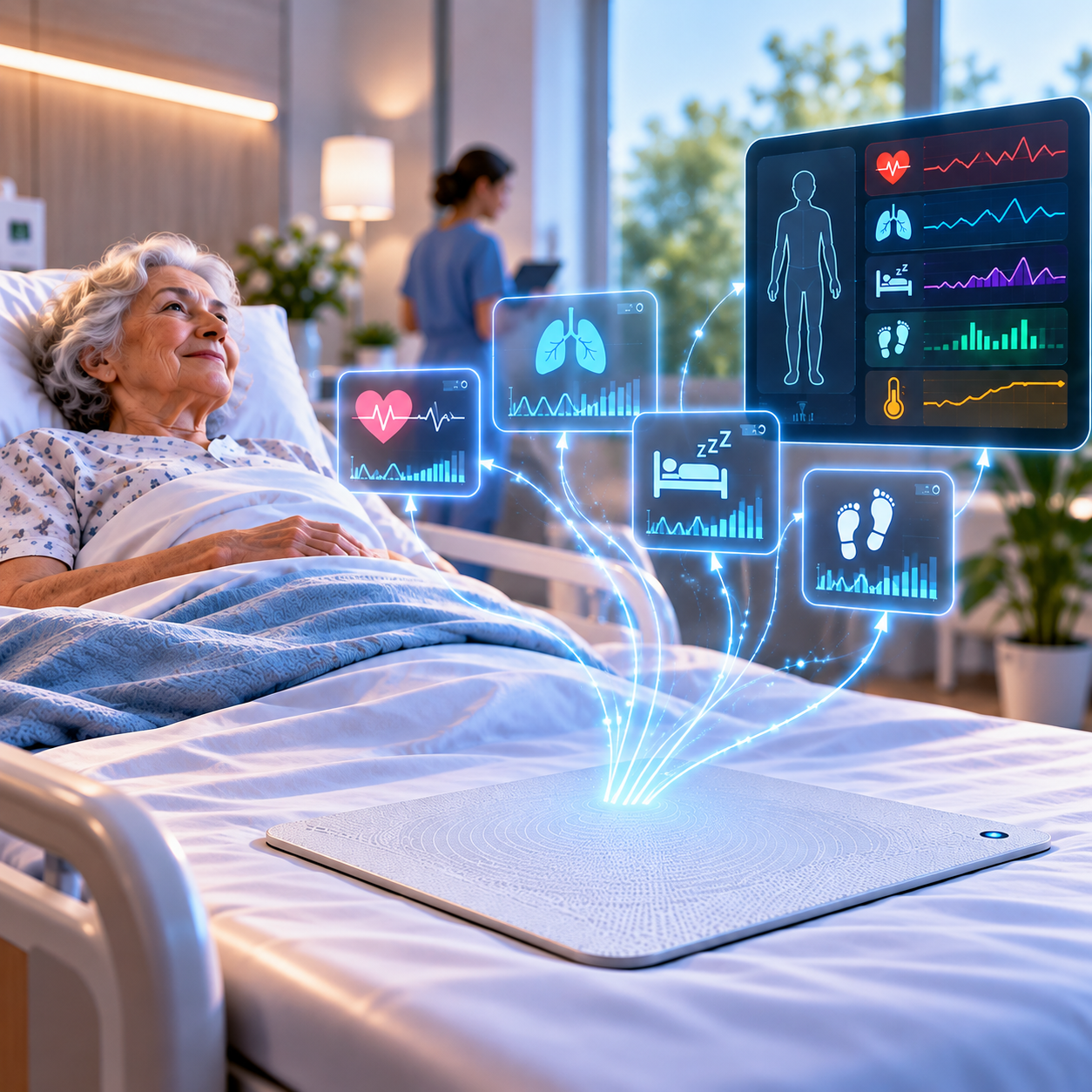
The collaboration between Anume (a specialist in remote solutions for home care, hospitals and residential care facilities) and DataTalk began in 2023. What started as an initial trial gradually developed into a large-scale remote monitoring solution for residents in care homes for older people.
Today, the system is deployed across 16 facilities, monitoring approximately 400 beds. It helps healthcare staff monitor residents’ conditions, prevent pressure ulcers (bedsores) and falls, and provides continuous data to support both day-to-day care and longer-term evaluation and improvement.
Project Goal: How Can Staff Care for Residents When They Cannot Be Everywhere?
Care homes for older people are often home to residents with limited mobility or who are completely immobile. For these residents, even seemingly minor changes can have serious consequences.
Remaining in one position for too long can lead to pressure ulcers – painful bedsores. Unexpected movement or getting out of bed can also increase the risk of falling.
Staff therefore need to check on residents regularly. Yet, as in many areas of healthcare, there is a simple reality:
“One nurse cannot be with every patient at the same time.”
Before monitoring was introduced, much of this information had to be gathered through physical checks at individual beds. With staffing shortages, it can be difficult to respond to every resident’s needs at precisely the right moment.
Anume therefore sought a way to give healthcare staff a continuous overview of what was happening at each bed, without having to check on patients in person all the time.
A Small Sensor Mat, a Wealth of Information
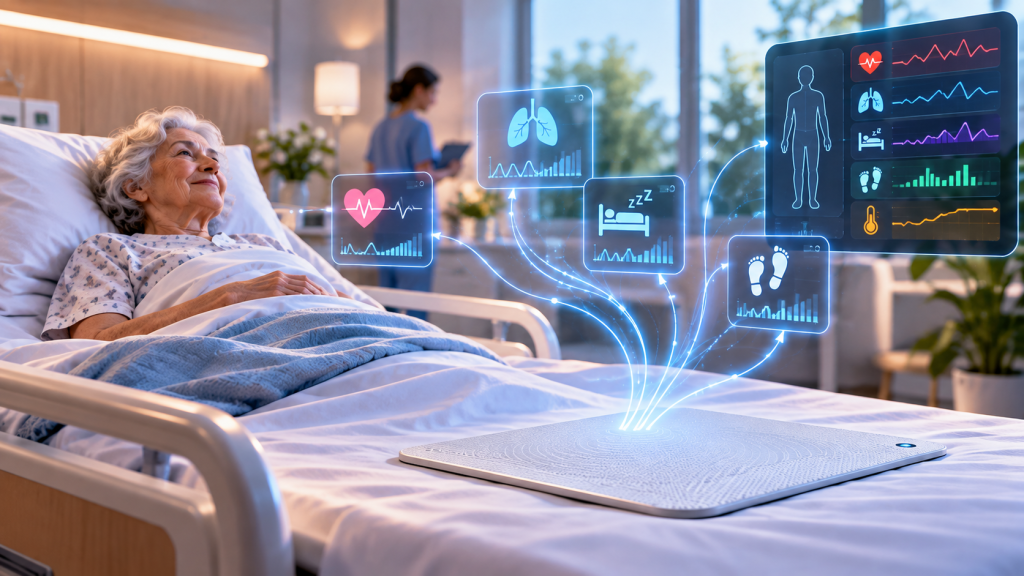
The solution was a specialised sensor mat placed beneath the mattress.
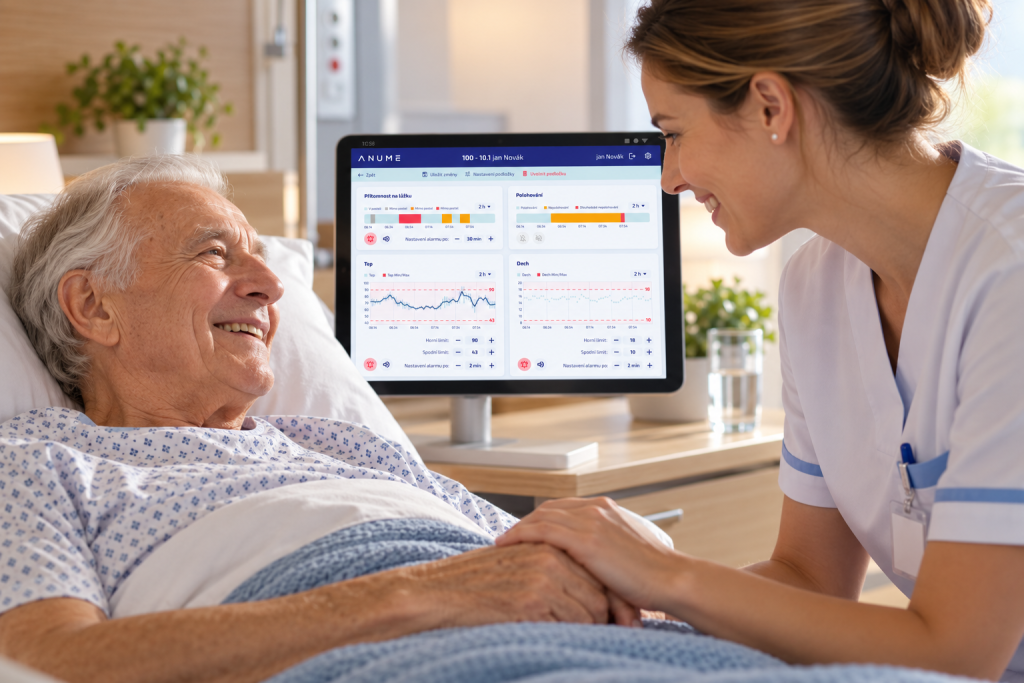
The mat can detect whether someone is in bed, their movement and selected vital signs, particularly heart rate and breathing. Data is continuously collected and sent to a central system, where staff can use it. The sensor principle and tablet-based data visualisation are part of the original Anume and DataTalk solution.
However, the greatest value lies in more than monitoring alone.
Data helps prevent problems.
If a resident remains in the same position for too long, staff can be notified that they need to intervene and reposition them.
If a resident leaves their bed, the system detects the event and can alert staff. For residents with severely limited mobility, getting out of bed may pose a significant fall risk.
This is where monitoring becomes much more than technology for tracking someone’s current status.
From Response to Prevention
One of the solution’s greatest benefits is the shift from reactive to preventive care.
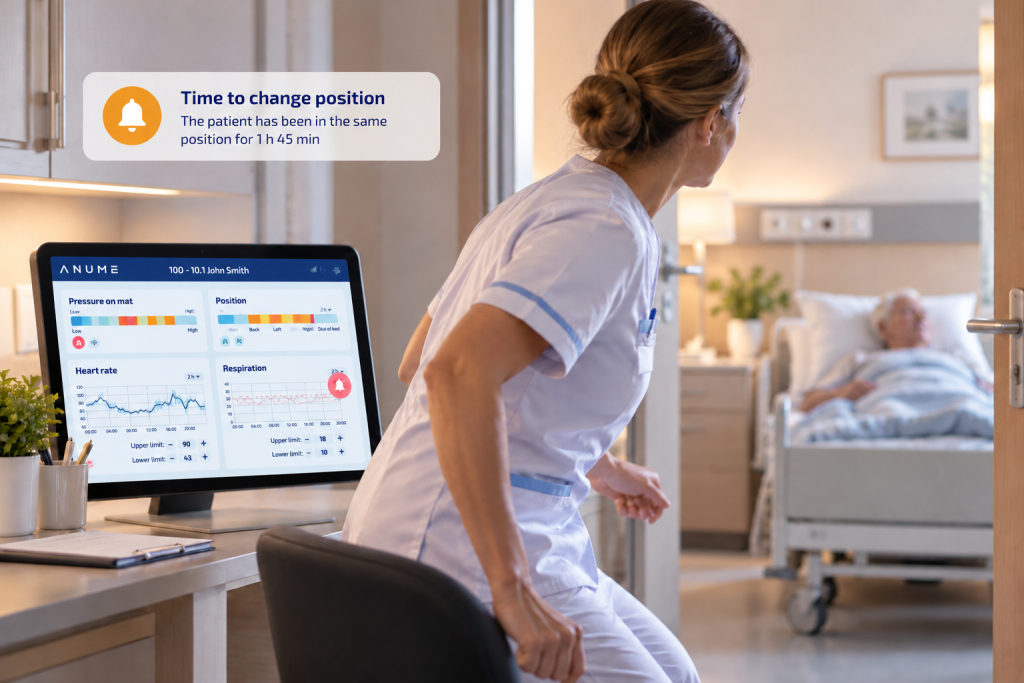
Instead of dealing with a problem only after it has occurred, staff can monitor the situation continuously and intervene before an issue develops.
This is especially important with pressure ulcers. Bedsores can be very painful for residents, and treatment may be lengthy and costly. Early information about the need to reposition a resident can mean not only greater comfort, but also fewer complications and more efficient use of healthcare resources.
The same principle applies to falls: rapid notification when someone leaves their bed allows staff to respond when every minute may matter.
The technology does more than deliver more data. It enables staff to act at the right time.
From a Pilot to a Comprehensive Solution Across 16 Facilities
The collaboration between Anume and DataTalk began with a pilot project in 2023.
Over time, it became clear that the solution had the potential to work on a much larger scale. The number of monitored beds grew, and today the system includes approximately 400 sensor mats across 16 facilities.
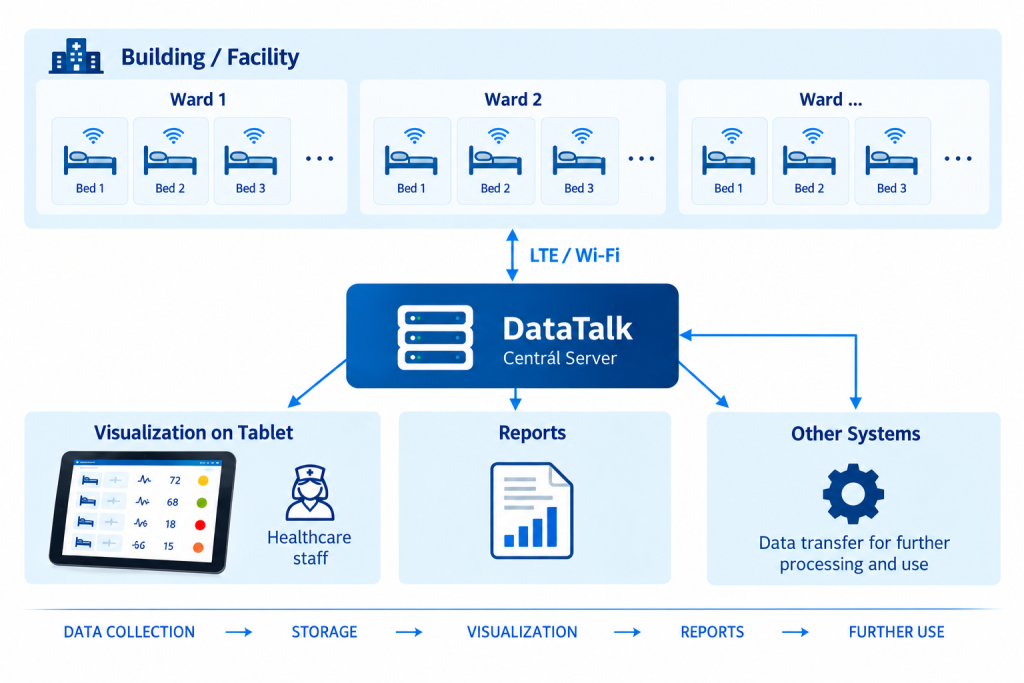
Each building may contain several wards, each with approximately 15 monitored beds.
As the number of facilities increased, so did the data challenge.
A simple overview is enough for just a few beds.
With hundreds of beds across numerous facilities, however, you need to reliably collect, store, organise, visualise and distribute large volumes of data.
This is where DataTalk comes in.
DataTalk: The Data Backbone of the Entire Solution
DataTalk’s role goes beyond displaying information on a screen.
DataTalk provides the data layer for the entire solution.
It collects data from individual sensor mats, sends it to a central server and stores it in a consistent format. It also handles further processing and distribution – from real-time visualisation and automated reports to transferring data to other systems.
In simple terms, the data flow works like this:
Sensor mats → DataTalk central server → visualisation / reports / other systems
This gives each facility a unified data infrastructure that can scale alongside the project.
The Right Information for the Right People
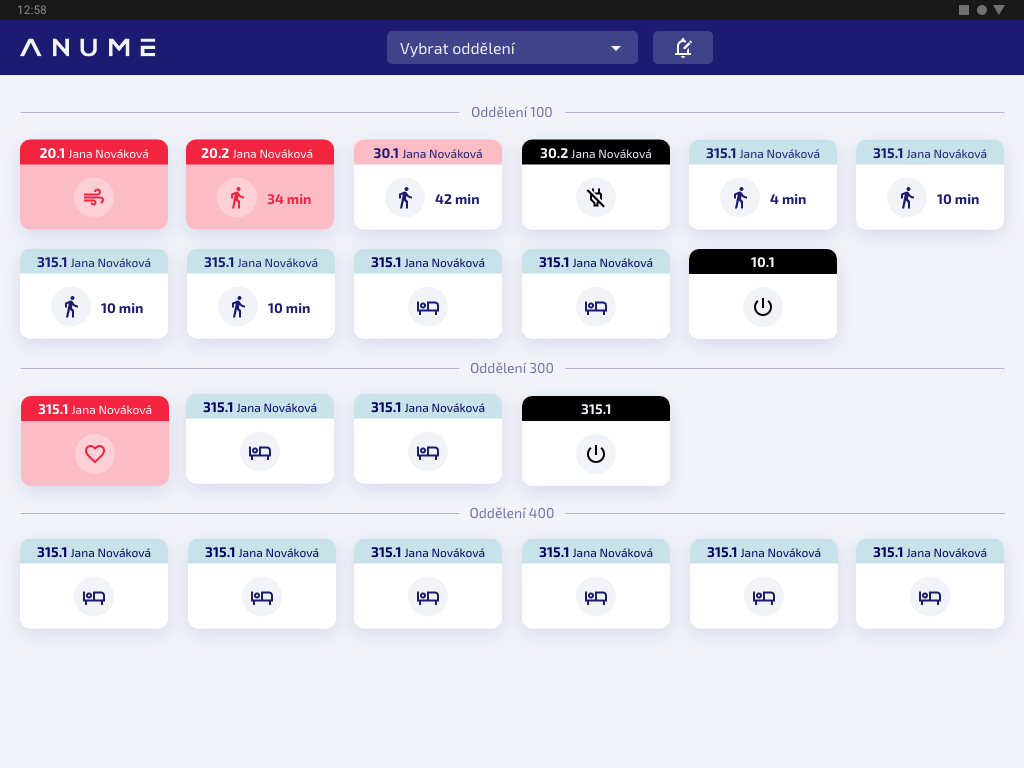
Data from monitored beds is available on a 10-inch tablet, giving healthcare staff an up-to-date overview of each patient’s status.
An important part of the solution is also access control.
Not every user needs to see the same data.
A staff nurse may have access to the information needed for day-to-day care, while a ward manager can see a broader overview of the entire ward.
Everyone gets exactly the information they need to do their job.
Data That Doesn’t Stay on the Screen
An important feature of the solution is that data is not used solely for immediate monitoring.
DataTalk automatically generates reports from the data, providing additional insights into the current state and development of care.
A ward manager can therefore keep track of potential issues and longer-term trends.
Management receives a broader view of the data and can use it to compare results, assess the quality of care and identify opportunities for improvement.
The data can also be passed on to other systems for further processing.
This is a key principle of the entire solution:
DataTalk doesn’t stop at visualisation. It prepares data for further use.
Results That Make a Difference
The results Anume reports for its solutions show that remote monitoring has a measurable impact not only on staff efficiency but, above all, on the quality of care. Anume currently reports, for example, 45 staff hours saved per month, a 66% reduction in the incidence of Stage 2+ pressure ulcers and a 21% reduction in fall-related injuries.
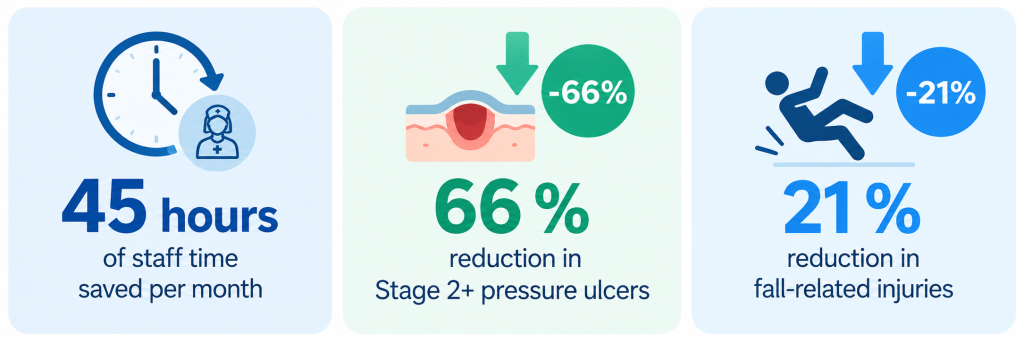
(Reported results across Anume solution deployments)
Data That Helps Deliver Better Care
What began as a pilot project in 2023 has grown into a collaboration between Anume and DataTalk, with the solution now in use across 16 facilities and approximately 400 monitored beds.
Anume contributes sensor technology and expertise in remote health monitoring. DataTalk handles:
data collection,
centralisation,
storage,
visualisation,
reporting
and further use.
The result is more than technologically advanced monitoring.
It is a system that helps healthcare staff see more, respond faster and prevent problems before they become serious.
And that is the real value of data in healthcare:
Less routine work. More prevention. Better information for the right decisions.
For more info about DataTalk Alarming system, go here.
Leave a Reply